You have found the perfect house. Nice kitchen. Good roof. A garden that actually gets sunlight. You shake hands on the price and feel that lovely rush of relief.
Then you hire any surveyor. The cheapest one. The one who could come out next Tuesday.
Big mistake. I have seen it happen more times than I can count. A buyer saves £100 on the survey and loses £20,000 on unexpected repairs. The surveyor missed the subsidence. Or the damp. Or the roof that needed replacing six years ago.
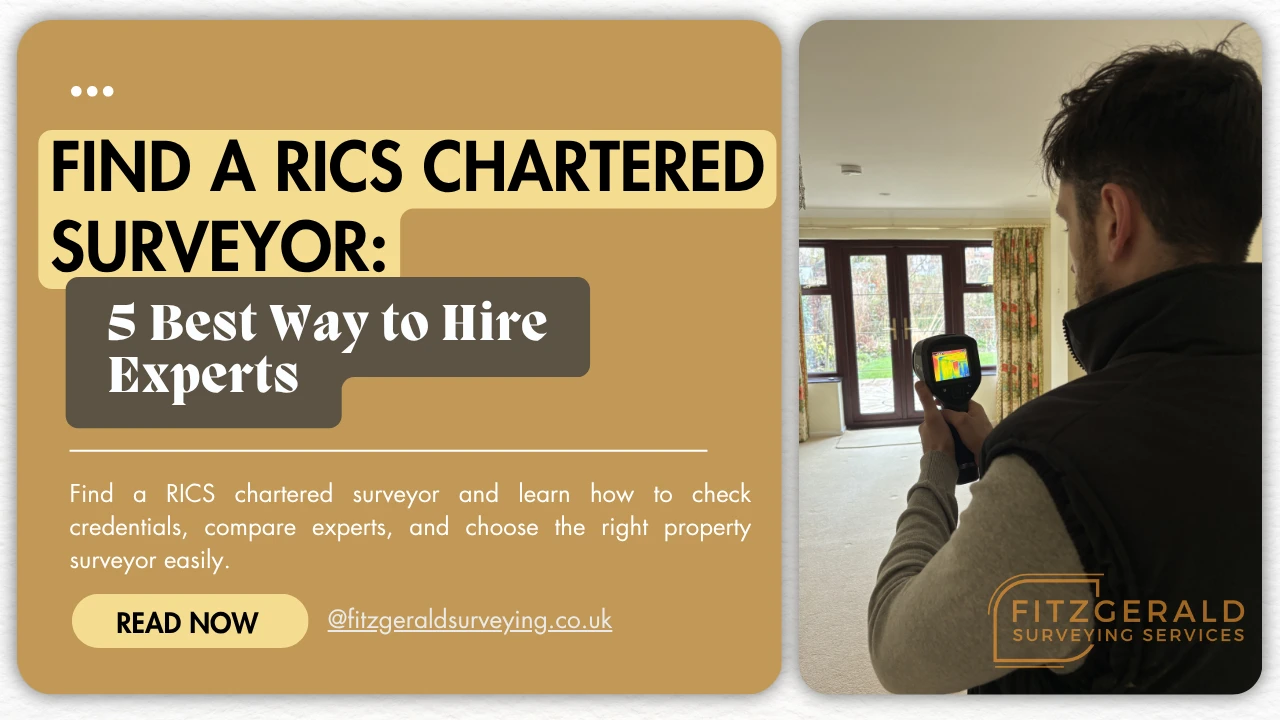
That is why you need to find a RICS chartered surveyor, not just any surveyor. Someone who actually knows what they are doing.
What Does “RICS Chartered” Actually Mean?
Let me explain it like this.
Anyone can call themselves a surveyor. There is no law stopping them. Scary, right?
But a RICS Chartered Surveyor has earned that title. RICS stands for the Royal Institution of Chartered Surveyors. It has been around since 1868. These are the gold standard people.
To become chartered, a surveyor has to pass rigorous exams. Complete years of supervised training. Then keep learning every single year to stay registered. They also follow a strict code of conduct. If they mess up, you can complain to RICS and get compensation.
So when you find a RICS chartered surveyor, you are not just hiring someone with a van and a clipboard. You are hiring a professional who answers to the oldest and most respected body in the property world.
Is My Surveyor Qualified? Here is How to Check
You might be sitting there thinking, “I already have a surveyor booked. How do I know if they are any good?”
Great question. Let me give you three quick checks to help you answer “Is my surveyor qualified?”
First, ask for their RICS registration number. Every chartered surveyor has one. It is like a licence plate. You can type that number into the RICS website and see their record instantly.
Second, look for the letters after their name. MRICS means Member. FRICS means Fellow (the top tier). If you see AssocRICS, they are an associate member still working toward full chartership. That is fine, but understand the difference.
Third, ask them directly: “Are you RICS regulated?” A qualified surveyor will say yes without hesitation. Someone who is not qualified will get awkward and change the subject.
So yes, always ask “Is my surveyor qualified?” before you hand over any money. This is a question that could save you thousands.
Why a Surveyor for Buying a House Is Not Optional
I hear this sometimes. “The mortgage lender did a valuation. Isn’t that enough?”
No. Absolutely not.
A lender’s valuation is for them, not for you. They send someone out for maybe twenty minutes. They just want to know if the house is worth what you are paying. They do not care if the wiring is dangerous or the roof leaks.
A proper surveyor for buying a house works for you. They spend two to four hours on site. They go into the loft. They lift manhole covers. They check the electrics, the drains, the damp, the timber, and the structural movement. Then they write you a report that tells you what is broken, what might break soon, and what it will cost to fix. You can learn more about the exact tools and methods they use in our detailed overview of what does a surveyor do during an inspection.
That report saves you from nasty surprises. Or it helps you negotiate the price down. Or it stops you from buying a money pit altogether.
Hiring the right surveyor for buying a house is one of the smartest decisions you will make.
How to Find a Surveyor: The Smart Way
Let me walk you through the process of how to find a surveyor. It is simpler than you think.
Start with the RICS website. They have a “Find a Surveyor” tool. You put in your postcode and property type, and it gives you a list of local chartered surveyors. That is your safest starting point.
Next, check their reviews. Google. Trustpilot. Facebook local groups. Look for surveyors who specialize in your type of property. An old Victorian terrace needs a different eye than a 1990s new build.
Then call three of them. Yes, call. Do not just email. Talk to them. See if they sound like someone you can trust. Ask about their experience. Ask what the report looks like. A good surveyor will happily answer your questions.
Finally, compare the quotes. But do not just look at the price. Look at what is included. A cheap survey might miss half the house. A proper one costs more but saves you money in the long run.
That is how to find a surveyor without getting ripped off.
How to Choose a Surveyor: Three Things That Matter
You have a shortlist. Now you need to know how to choose a surveyor. Here is what actually matters.
- Experience with your property type: A surveyor who usually works on modern flats might miss the signs of subsidence in a 200 year old cottage. Ask them directly: “How many houses like mine have you surveyed in the past year?”
- The level of the survey: There are three RICS levels. Level 1 is basic. Level 2 (HomeBuyer Report) is standard for most modern homes. Level 3 (Building Survey) is for older, larger, or unusual properties. Do not let anyone sell you a Level 1 if you need a Level 3.
- The report sample: Ask to see a sample report. A good report is clear, detailed, and easy to read. It uses traffic light colours (red, amber, green) to show urgency. It gives you repair costs and timelines. A bad report is vague, full of legal disclaimers, and leaves you more confused than before.
So when you are ready to choose a surveyor, trust your gut. Pick someone who listens, explains, and does not rush you off the phone.
Ask a Surveyor: The Questions You Should Actually Ask
Most people ask the wrong questions. They ask “how much” and “when can you come”. That is it.
Here are the real questions you should ask a surveyor before hiring them.
- “Will you attend the property in person, or is it done remotely?” (Avoid remote surveys if you can. In-person is better.)
- “Do you go into the loft and under the floors?” (Some surveyors won’t. Make sure yours does.)
- “How long will you spend on site?” (Less than two hours is a red flag for a typical house.)
- “What happens if you find a serious problem?” (A good surveyor will talk you through it, not just dump a report on you.)
- “Are you insured for professional negligence?” (They should say yes immediately.)
Ask these five questions when you’re on the phone. The right surveyor will answer them clearly. The wrong one will stumble.
A Quick Summary: Finding Your RICS Surveyor
| Step | What To Do | Why It Matters |
| 1. Use the RICS website | Search for local chartered surveyors | Guarantees qualification and regulation |
| 2. Check reviews | Look at Google and Trustpilot | Real feedback from real clients |
| 3. Call three surveyors | Ask about experience and approach | You need to trust their voice |
| 4. Compare levels | Choose Level 2 or Level 3 | Level 1 is too basic for buyers. |
| 5. Ask five questions | Use the list above | Separates pros from amateurs |
Bottom Line
Buying a house is probably the biggest cheque you will ever write. It deserves a proper survey from someone who actually knows what they are doing.
Do not gamble with a cheap, unqualified inspector. Do not rely on the lender’s valuation. And definitely do not skip the survey altogether.
Take an afternoon. Do the research. Find a RICS chartered surveyor who will look after you like a good doctor looks after their patient. Make sure your legal offer is protected by understanding the subject to survey meaning before signing anything. Find someone who tells you the truth, even when it is uncomfortable.