You found a house. You love it. You are already imagining your coffee on that balcony.
Hold on. What is hiding behind that fresh paint? Cracked walls? Damp? A roof that leaks every time it rains?
Making an offer feels great. But it is also terrifying. Because one wrong move and your dream home becomes a money pit.
Ever heard the phrase “subject to survey”? Good. Because that little phrase could save you thousands.
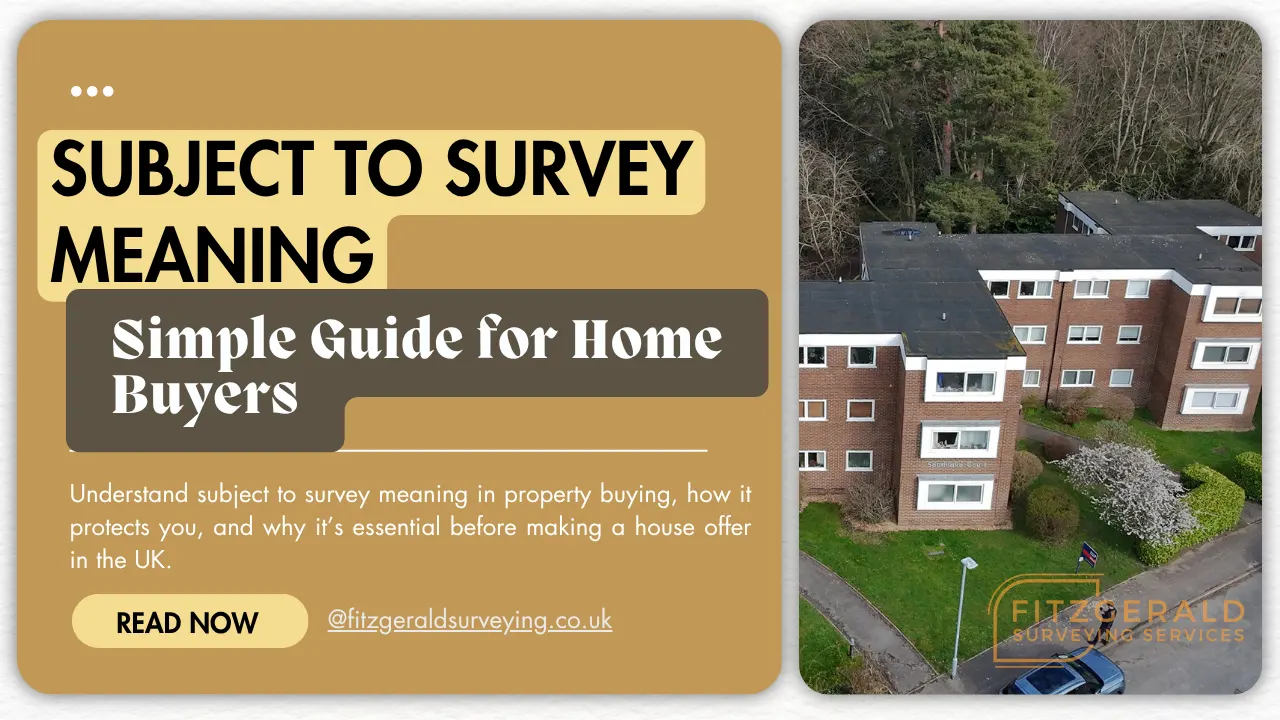
Let me break down the subject to survey meaning for you. No jargon. Just the truth. The term subject to survey is one of the most important clauses in property buying.
Okay, So What Does Subject to Survey Mean?
Straight answer. When you make a house offer subject to survey, you are basically saying this to the seller: “I want your house. But my final decision depends on what a professional surveyor finds.”
Simple. You are making an offer on a house subject to survey. That means you are not committed yet. Not fully.
Think of it as a test drive. But for bricks and mortar. The surveyor goes in. Pokes around. Checks the roof, the walls, the electrics, and the drains. Then gives you a report.
Is the report clean? Great. You move ahead.
If it finds problems? Now you have power. You can ask for money off. You can ask the seller to fix things. Or you can just walk away.
No survey? You are buying blind. Would you do that?
The Clause That Saves Your Backside
Here is something most people do not realise. A verbal offer means nothing. Legally, zero.
That is why smart buyers demand a subject to survey clause in writing.
This clause is your escape hatch. Without it, a seller can push you to complete even after bad news comes to light.
Sometimes you will see the words subject to contract and survey or subject to survey and contract. Same idea. Two conditions. A good survey. And a signed contract.
If you are buying land or a new build, look for subject to site survey. That checks the ground, boundaries, and access. Things you cannot see with your own eyes.
Do not skip this. Please.
The Numbers Are Scary. Read Them Anyway.
Let me hit you with some real data. A study looked at 2,000 UK buyers who skipped surveys.
44% of them needed major repairs within the first year.
Not small stuff. We are talking about significant problems. 61% of those repairs were serious.
Now the money part.
- 49% spent over £3,000 fixing things.
- 15% got bills over £10,000.
RICS did their own number crunch. Buyers without surveys faced average repair bills of £5,750. Some paid £12,000 or more.
Why do people skip? Because they think they do not need one. 29% said a survey was unnecessary. 23% said the house looked fine. 20% trusted their own eyes.
Big mistake.
What Actually Turns Up in a Survey?
I have seen hundreds of these reports. Here is what surveyors keep finding.
- Electrical problems. Old wiring. Dodgy fuse boxes. 14% of surveys.
- Heating issues. Same percentage. 14%.
- Outside damage. Crumbling brickwork. Cracked roof tiles. 12%.
- Roof trouble. 8%.
- External wall worries. 9%.
Then there is damp. Plumbing failures. Structural movement. The kind of stuff that costs a fortune to put right.
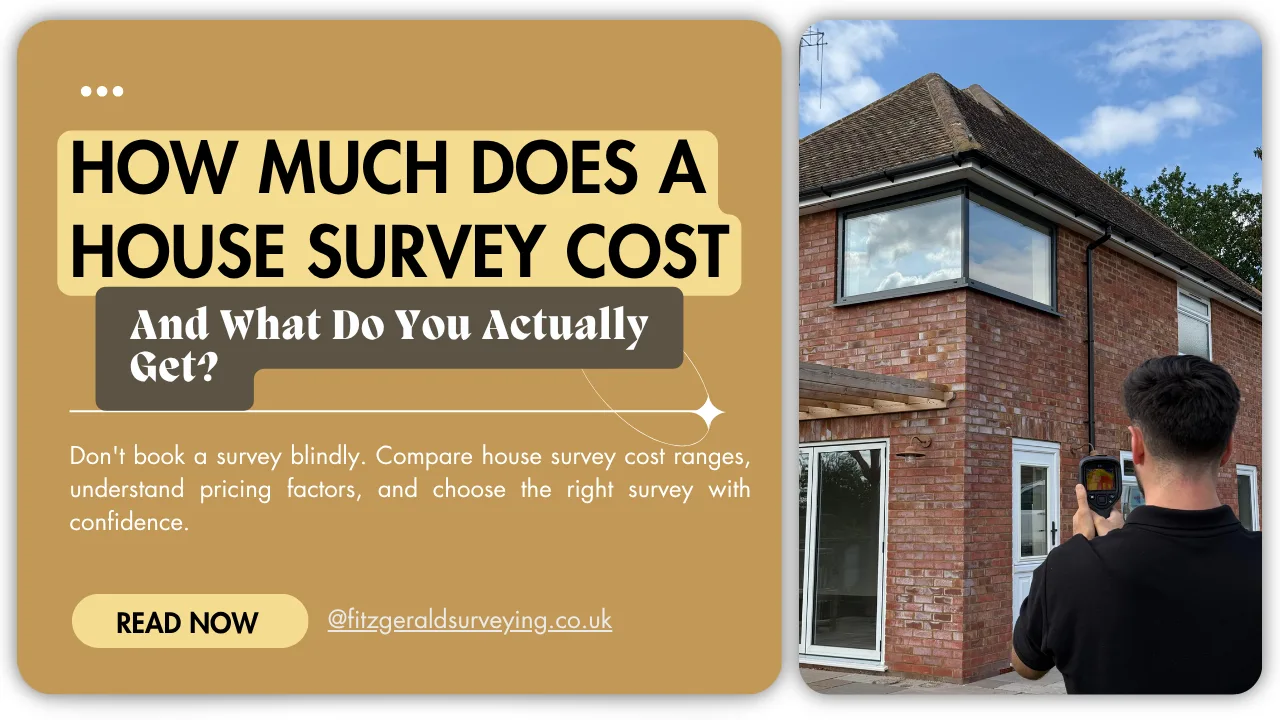
Then there is damp. Plumbing failures. Structural movement. The kind of stuff that costs a fortune to put right. Because moisture is so often hidden beneath fresh plaster, it pays to know exactly how surveyors check for damp using professional equipment before you buy.
You cannot see these things during a twenty-minute viewing. That is the point.
Which Survey Do You Actually Need?
Three levels. RICS sets the standards. Here is the quick version.
| Survey Type | Average Cost | Best For |
| RICS Level 1 (Condition Report) | ~£380 | Newer homes, no obvious issues |
| RICS Level 2 (HomeBuyer Report) | ~£445 | Most normal houses (the popular ones) |
| RICS Level 3 (Building Survey) | ~£629 | Old homes, listed buildings, extensions |
Prices move depending on where you live and how much the house is worth. For a £300k to £600k property, budget £500 to £700 for a Level 2.
One warning. A mortgage valuation is not a survey. Repeat that. It protects the lender. Not you. Never mix them up.
So You Made an Offer on House Subject to Survey. Now What?
The surveyor does their job. You get the report. Three things can happen.
The report is clean
Great! Pop the champagne. Focus on the legal bits, searches, solicitor questions, and exchange dates.
The report finds problems
Do not panic. Breathe. Old houses have quirks. Here is your move.
Talk to the surveyor. Ask them straight: cosmetic or structural? Urgent or not?
Then negotiate. Use the report as leverage. Ask for a price cut. Or ask the seller to fix the big stuff.
If it is serious, get a specialist. Structural engineer. Damp expert. Someone who knows more than the surveyor.
And if the problems are huge? Walk away. Seriously. Sometimes the smartest thing you can do is nothing.
The negotiation reality check
Data says 67% of buyers renegotiate after a survey. 10% get a price reduction. 9% get the seller to fix things.
Last year, 26% of UK house sales fell through. 18% of those were because of survey findings.
You are not being difficult. You are being sensible.
The Upside and Downside
| Pros | Cons |
| Peace of mind. Real protection. | Adds a couple of weeks to the process. |
| You can negotiate harder. | Some sellers say no and walk. |
| Freedom to pull out if needed. | Costs money upfront. £380 to £629. |
| Could save you thousands. |
The Bottom Line
A few hundred pounds on a survey could save you from a £10,000 nightmare. Nearly half of buyers who skip surveys regret it within a year.
So do this. Make your offer on the house subject to a survey. Insist on the subject to survey clause. Understand what subject to contract and survey means. Ask about the subject to the site survey if it is land or a new build.
Do not let excitement win. Be smart. Your bank account will thank you later.