You are here: Home » Blog » How to Choose the Right Type of House Survey for Your Property
How to Choose the Right Type of House Survey for Your Property
Last updated on 14th March 2026 by Fitzgerald Surveying
Buying a home is one of the biggest financial decisions most people will ever make. Despite this, many buyers skip or misunderstand an important step: getting the right house survey.
Choosing the wrong survey can leave you unaware of serious problems, such as:
- Structural damage
- Damp
- Subsidence
These issues could cost thousands of dollars to fix. On the other hand, ordering a very detailed and expensive survey for a new home may not be needed.
This guide explains:
- The different types of house surveys
- What each survey covers
- How much they cost
- How to choose the right survey for your home and situation
Taking the time to get the right survey can save you stress and money in the long run.
What Is a House Survey and Why Do You Need One?
A house survey is an independent inspection of a property done by a qualified surveyor. It checks the condition of the building and points out any defects, possible problems, or areas that need further investigation.
A survey is not a legal requirement in England, Wales, or Scotland. However, it is strongly recommended for any buyer. Here’s why:
- It reveals hidden defects that you might not see during a viewing.
- It can give you negotiating power to lower the asking price.
- It protects you from unexpected repair costs after you buy.
- It gives you peace of mind and confidence in your purchase.
Without a survey, you could be buying a property “as seen.” This means any problems found after the contract are your financial responsibility.
The Different Types of House Surveys at a Glance
In the UK, a qualified surveyor can carry out several types of house surveys. The Royal Institution of Chartered Surveyors (RICS) regulates the main surveys, which come in three levels. Surveyors also offer specialist surveys for specific needs.
| Survey Type | Best For | Approx. Cost | Depth of Inspection |
| Mortgage Valuation | Lender requirement only | £150–£300+ | Minimal |
| RICS Level 1 (Condition Report) | New builds / newer properties | £250–£400 | Basic |
| RICS Level 2 (HomeBuyer Report) | Standard properties in fair condition | £400–£700+ | Moderate |
| RICS Level 3 (Building Survey) | Older / unusual / poor-condition homes | £600–£1,500+ | Comprehensive |
| New Build Snagging Survey | Brand-new properties | £300–£600 | Defect-focused |
| Specialist Surveys | Specific suspected issues | Varies | Targeted |
Let’s explore each of these different types of home surveys in detail.
1. Mortgage Valuation: What It Is and What It Isn’t
When you apply for a mortgage, your lender will usually arrange a mortgage valuation. This is the most basic form of property check. Many buyers confuse it with a full survey, but they are very different.
What a mortgage valuation covers:
- It is done for the lender’s benefit, not yours.
- The surveyor checks if the property is worth the amount the lender will give.
- It is usually a brief visit or sometimes done remotely using data from similar property sales.
- It does not look closely at the condition of the property.
What it doesn’t cover:
- Structural issues in the building.
- Damp, rot, or timber decay.
- Roof, electrical, or plumbing problems.
- Any non-standard construction issues.
Important: A mortgage valuation is not a full survey. Many buyers mistakenly think it counts as one, it does not.
Cost:
- Usually between £150 and £300 or more.
- Some lenders include it for free with their mortgage.
Should you rely on it alone?
No. Unless you are an experienced property professional buying a simple, modern flat, you should always get an independent survey in addition to the mortgage valuation.
2. RICS Level 1 — Condition Report (formerly called the Home Condition Report)
The RICS Level 1 survey is the most basic of the three RICS survey types. It gives a quick snapshot of the property’s condition. The report uses a simple traffic light system:
- 1 = No action needed.
- 2 = Further investigation recommended.
- 3 = Urgent action required.
What a Level 1 survey covers:
- Visible condition of the main parts of the property.
- Traffic light ratings for walls, roof, floors, windows, and other key areas.
- Notes on urgent problems and possible legal issues.
- No market valuation.
- No rebuild cost estimate.
Who a RICS Level 1 survey is best for:
This survey is usually suitable for:
- New-build homes that are simple in design.
- Modern properties built with standard materials.
- Buyers who only want a basic overview of the property.
Cost:
- Usually between £250 and £400.
- The price depends on the property size and location.
Limitations:
This survey only reports on what the surveyor can see. It does not investigate hidden problems. Because of this, defects below the surface may be missed. For many buyers, a Level 2 or Level 3 survey offers better protection and value.
3. RICS Level 2 — HomeBuyer Report (The Most Popular Choice)
The RICS Level 2 HomeBuyer Report is the most commonly used survey in the UK. Many buyers choose it when purchasing a residential property. It provides more detail than a Level 1 survey while still being affordable for standard homes.
What a homebuyer report covers:
- Inspection of accessible areas of the property.
- Checks for damp, timber problems, and insulation using tools like a damp meter.
- Traffic light ratings for different parts of the home.
- Optional market valuation and rebuild cost estimate.
- Advice on repairs, maintenance, and possible risks.
- Notes on legal issues to discuss with your solicitor.
Tip: Try to choose the HomeBuyer Report that includes a market valuation. This confirms the property’s value and can help you negotiate if problems are found.
Who a RICS Level 2 survey is best for:
This survey is ideal for:
- Standard houses, flats, and maisonettes.
- Homes built after about 1900 using normal construction methods.
- Properties that appear to be in reasonable condition.
- Buyers who want a good balance of detail and price.
Who should not rely on a Level 2 survey:
This survey may not be suitable if the property:
- Is more than 100 years old.
- Shows clear signs of structural movement or major damp issues.
- Uses non-standard construction (such as timber frame or thatched roofs).
- Has large extensions or major alterations.
Cost:
- Usually between £400 and £700 or more.
- Prices depend on the property’s size, age, and location.
- Homes in London and the South East often cost more.
Is a Level 2 HomeBuyer Report worth it?
Yes. For most buyers, it offers the best balance between cost and detail. It highlights common property issues and helps you avoid unexpected repair costs after buying.
4. RICS Level 3 — Building Survey (The Most Comprehensive Option)
The RICS Level 3 Building Survey is the most detailed type of house survey. It was previously called a Full Structural Survey. This survey gives a deep look at the property’s structure and overall condition. It is the closest you can get to a full inspection of a building.
What a Level 3 building survey covers:
- Detailed inspection of all accessible areas of the property.
- Checks of roof spaces and areas under floors where possible.
- Assessment of structural parts such as walls, roofs, floors, and drainage.
- Inspection of garages, sheds, and other outbuildings.
- Explanation of construction materials and building methods
- Identification of major defects and their possible causes
- Advice on repairs, maintenance, and possible repair costs
- Option to focus on specific areas of concern
Who a Level 3 Building Survey is best for:
This survey is strongly recommended if:
- The property is 50–80 years old or older.
- The home is a period property (Victorian, Edwardian, or pre-war).
- The property has major renovations or extensions.
- The home uses non-standard construction such as listed buildings, barn conversions, or thatched roofs.
- There are visible signs of dampness, subsidence, or structural movement.
- You plan to carry out major renovation work.
Tip: If you are unsure which survey to choose, the Level 3 survey is usually the safest option. The extra cost is small compared to the risk of missing major structural problems.
Cost:
- Usually between £600 and £1,500 or more.
- Larger, complex, or listed properties may cost more.
Although it may seem expensive, it can save you a lot of money if serious defects are discovered.
Does a Level 3 survey include a valuation?
A Level 3 Building Survey does not automatically include a market valuation. If you want one, you can ask the surveyor to add it or arrange a valuation separately.
5. New Build Snagging Survey
If you are buying a brand-new home from a developer, a standard RICS survey may not be necessary. Instead, many buyers choose a snagging survey.
What a snagging survey is:
A snagging survey is a detailed inspection of a new-build home. The goal is to find defects, poor workmanship, or unfinished work. These issues are called “snags.”
Common examples include:
- Paint splashes or scratched surfaces.
- Poorly fitted doors or windows.
- Uneven flooring or tiling.
- Missing sealant or poor finishing.
- Insulation or drainage problems.
When you should get a snagging survey:
- Ideally before legal completion, so the developer can fix problems first.
- Some developers do not allow access before completion.
- If that happens, arrange the survey as soon as possible after moving in.
- This should be done while the property is still under warranty.
Cost:
- Usually between £300 and £600.
- The price depends on the size of the property.
Most new homes come with an NHBC Buildmark warranty. However, this does not replace the value of an independent snagging inspection. A survey can help ensure problems are found and fixed early.
6. Specialist Surveys: When You Need More Than a Standard Inspection
Sometimes a standard survey is not enough. This can happen if a surveyor finds a possible problem or if the property already has a known issue. In these cases, you may need a specialist survey.
A specialist survey focuses on one specific part of the property. It is carried out by an expert in that field.
Common specialist surveys include:
- Structural engineer’s report – Used when there are signs of subsidence, cracks, or structural movement.
- Damp and timber survey – Checks for rising damp, condensation, dry rot, wet rot, and woodworm.
- Drainage survey (CCTV drain survey) – Uses cameras to inspect underground drains and find blockages, damage, or tree roots.
- Electrical Installation Condition Report (EICR) – Examines the safety and condition of the property’s electrical system.
- Gas safety and boiler inspection – Completed by a Gas Safe registered engineer.
- Asbestos survey – Important for properties built before 2000, especially those built between 1950 and 1980.
- Japanese knotweed survey – Checks for the presence of knotweed, which can affect mortgage approval.
- Roof inspection – A detailed check of flat roofs, thatched roofs, or complex roof structures.
Specialist surveys can also help estimate repair costs. Buyers often use these estimates to negotiate the property price with the seller.
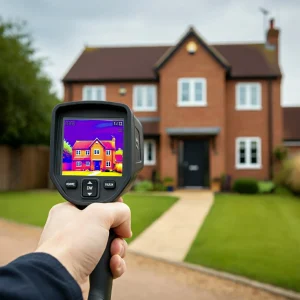
How to Choose the Right Type of Survey for Your Property
Now that you know the different types of home surveys, here is a simple guide to help you choose the right one for your situation:
Step 1: Consider the age and type of property
- New build or modern property (post-2000): Snagging survey or RICS Level 1.
- Standard modern property (1950s–2000s) in good condition: RICS Level 2 HomeBuyer Report.
- Standard property with some concerns or in fair-to-poor condition: RICS Level 2 or Level 3 survey.
- Period property, listed building, unusual construction, or obvious defects: RICS Level 3 Building Survey.
Step 2: Consider the price and your risk tolerance
The more you are spending, the more detailed your survey should be. For example, if you are paying £500,000 for an Edwardian terraced house, a £900 Level 3 survey is less than 0.2% of the purchase price. That small cost could save you from a major financial mistake later.
Step 3: Review what the vendor has disclosed
If the seller has mentioned known issues, such as past damp treatment, underpinning, or roof repairs, you should consider a higher-level survey. Specialist reports can also help verify the extent and effectiveness of any previous work.
Step 4: Ask your surveyor for advice
When getting survey quotes, talk directly to the surveyor. A good RICS-registered surveyor will honestly assess the property and tell you which level of survey is best. If they recommend a Level 3 survey for a property you thought was simple, it’s wise to follow their advice.
Step 5: Factor in your plans for the property
If you plan to renovate, extend, or make major changes to the property, a Level 3 Building Survey is usually the best choice. It provides detailed information about the building and any constraints that could affect your plans.
What Happens After Your Survey
Once you get your survey report, read it carefully. Look at everything, including appendices and footnotes. Many buyers only read the summary and miss important details deeper in the report.
If the survey finds problems, you have several options:
- Go ahead with the purchase and budget for repairs.
- Renegotiate the price to reflect the cost of fixing issues.
- Ask the seller to carry out specific repairs before exchange.
- Commission specialist surveys to get accurate costs for major defects.
- Walk away from the purchase if the problems are too serious or the seller won’t negotiate.
It’s important not to panic if the survey highlights issues. Most surveys, especially for older homes, will flag some problems. The key is to figure out whether the issues are minor maintenance tasks or serious structural defects, and plan your budget accordingly.
Frequently Asked Questions About Types of House Surveys
What survey do I need when buying a house?
For most standard homes in reasonable condition, a RICS Level 2 HomeBuyer Report is the best starting point. If the property is older, unusual, or has visible problems, an RICS Level 3 Building Survey is strongly recommended.
Is a homebuyer report the same as a building survey?
No. A HomeBuyer Report (Level 2) is less detailed than a Building Survey (Level 3). It gives a good overview of visible issues but does not investigate as deeply as a full building survey.
Can I use the mortgage valuation as my survey?
No. A mortgage valuation is for your lender’s benefit only. It does not provide a detailed assessment of the property’s condition. You should always commission an independent survey.
How long does a house survey take?
A RICS Level 2 survey usually takes 2–4 hours on site. A Level 3 Building Survey can take 4–8 hours or more, depending on the property’s size and complexity. Reports are usually delivered within 3–5 working days after the inspection.
Can a survey cause a sale to fall through?
A survey can reveal issues that may lead a buyer to renegotiate or withdraw from a purchase. The survey itself does not cause problems; it simply identifies pre-existing issues. Finding problems before exchange of contracts protects you.
Do I need a survey on a new-build property?
Yes, but the right type of survey is a snagging survey, not a standard RICS Level 1, 2, or 3 survey. New-builds can still have defects even though they are brand new.
Final Thoughts: Don’t Skip Your Survey
Choosing the right house survey is one of the most important decisions in the home buying process. Each type of survey serves a different purpose. Picking the wrong one, or skipping a survey altogether, could be very costly.
As a rule of thumb:
- Always get an independent survey, even if your lender has done a valuation.
- If you are unsure between a Level 2 and Level 3 survey, choose the more detailed option.
- Use specialist surveys for specific issues flagged in your main survey.
- Use the survey results to negotiate or plan repairs, not just as a source of worry.
The cost of a comprehensive survey is small compared to the protection and confidence it gives you. With the right information, you can move forward with your purchase fully informed or renegotiate if needed.


Fitzgerald Surveying

 Registered Office: 63 New Road, Weston Turville, Aylesbury HP22 5QY
Registered in England and Wales No. 15951656 | VAT Number: 498 5161 44
enquiries@fitzgeraldsurveying.co.uk
0333 2249 516
Monday to Saturday 8:00am - 5:00pm / Sunday - Closed

 Your email address will never be shared